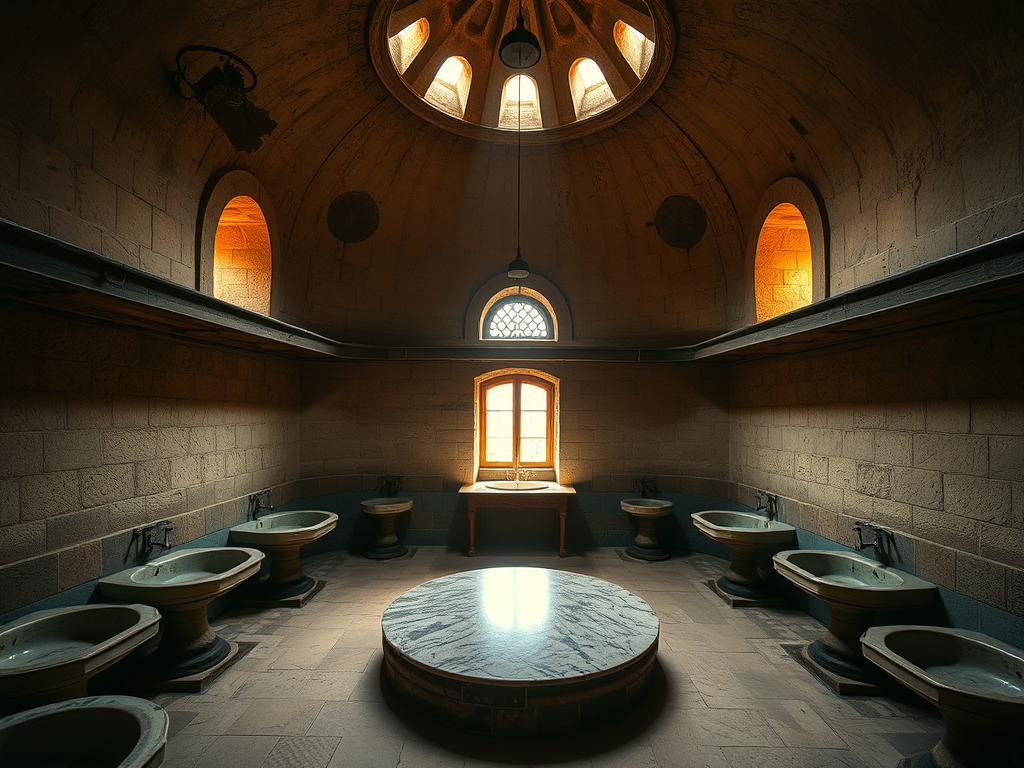

The Seferşah Hammam stands as a testament to the region’s rich architectural heritage. This historic Turkish bath, believed to have been constructed during the Ottoman era, showcases the traditional design and communal bathing culture that was prevalent in the empire. The hammam’s architecture reflects the typical Ottoman style, featuring a series of interconnected rooms with domed ceilings, marble basins, and a central göbek taşı (heated marble platform), which is characteristic of such establishments.
Over the centuries, the Seferşah Hammam has undergone various phases of use and neglect. In recent years, efforts have been made to restore and preserve the structure to maintain its historical significance. The restoration process aimed to repair the deteriorating elements of the building, including the domes and walls, while ensuring that the original architectural features were preserved. This initiative not only sought to protect the hammam as a cultural landmark but also to revive the traditional bathing practices associated with it.

Currently, the Seferşah Hammam is not in active use as a public bathhouse. However, it remains an important historical site, attracting visitors interested in Ottoman architecture and the cultural history of the region. The restored structure serves as a reminder of the communal aspects of bathing in Ottoman society and stands as a symbol of the efforts to preserve cultural heritage in the face of modernization.
While the Seferşah Hammam may no longer function as a bathing facility, its preservation allows contemporary audiences to appreciate the architectural ingenuity and cultural practices of the past. The site continues to be a valuable asset for cultural tourism in Ezine, offering insights into the region’s historical lifestyle and communal traditions.

Seferşah Hamamı, bölgenin zengin mimari mirasının bir göstergesi olarak öne çıkmaktadır. Osmanlı döneminde inşa edildiğine inanılan bu tarihi Türk hamamı, imparatorluk döneminde yaygın olan geleneksel tasarım ve ortak kullanım kültürünü yansıtmaktadır. Hamamın mimarisi, kubbeli tavanlar, mermer lavabolar ve ortasında bulunan göbek taşı gibi tipik Osmanlı tarzı özellikleri içeren bir dizi birbirine bağlı odadan oluşmaktadır.
Yüzyıllar boyunca Seferşah Hamamı çeşitli kullanım ve ihmal dönemlerinden geçmiştir. Son yıllarda, yapının tarihi önemini korumak amacıyla restorasyon ve korunma çalışmaları yapılmıştır. Restorasyon süreci, kubbeler ve duvarlar dahil olmak üzere yapının yıpranan unsurlarını onarmayı ve orijinal mimari özelliklerin korunmasını hedeflemiştir. Bu girişim, hamamı kültürel bir simge olarak korumayı ve geleneksel hamam uygulamalarını canlandırmayı amaçlamıştır.
Günümüzde Seferşah Hamamı aktif bir halk hamamı olarak kullanılmamaktadır. Ancak, Osmanlı mimarisi ve bölgenin kültürel tarihiyle ilgilenen ziyaretçiler için önemli bir tarihî alan olarak varlığını sürdürmektedir. Restorasyonu tamamlanan yapı, Osmanlı toplumunda hamamların toplumsal yönlerini hatırlatmakta ve modernleşme karşısında kültürel mirası koruma çabalarının bir simgesi olarak durmaktadır.
Seferşah Hamamı artık bir kullanım tesisi olmasa da, korunması sayesinde günümüz ziyaretçileri geçmişin mimari dehasını ve kültürel uygulamalarını takdir edebilmektedir. Burası, Ezine’de kültürel turizm açısından değerli bir varlık olarak kalmakta ve bölgenin tarihî yaşam biçimi ile toplumsal geleneklerine dair önemli bilgiler sunmaktadır.




Leave a Reply