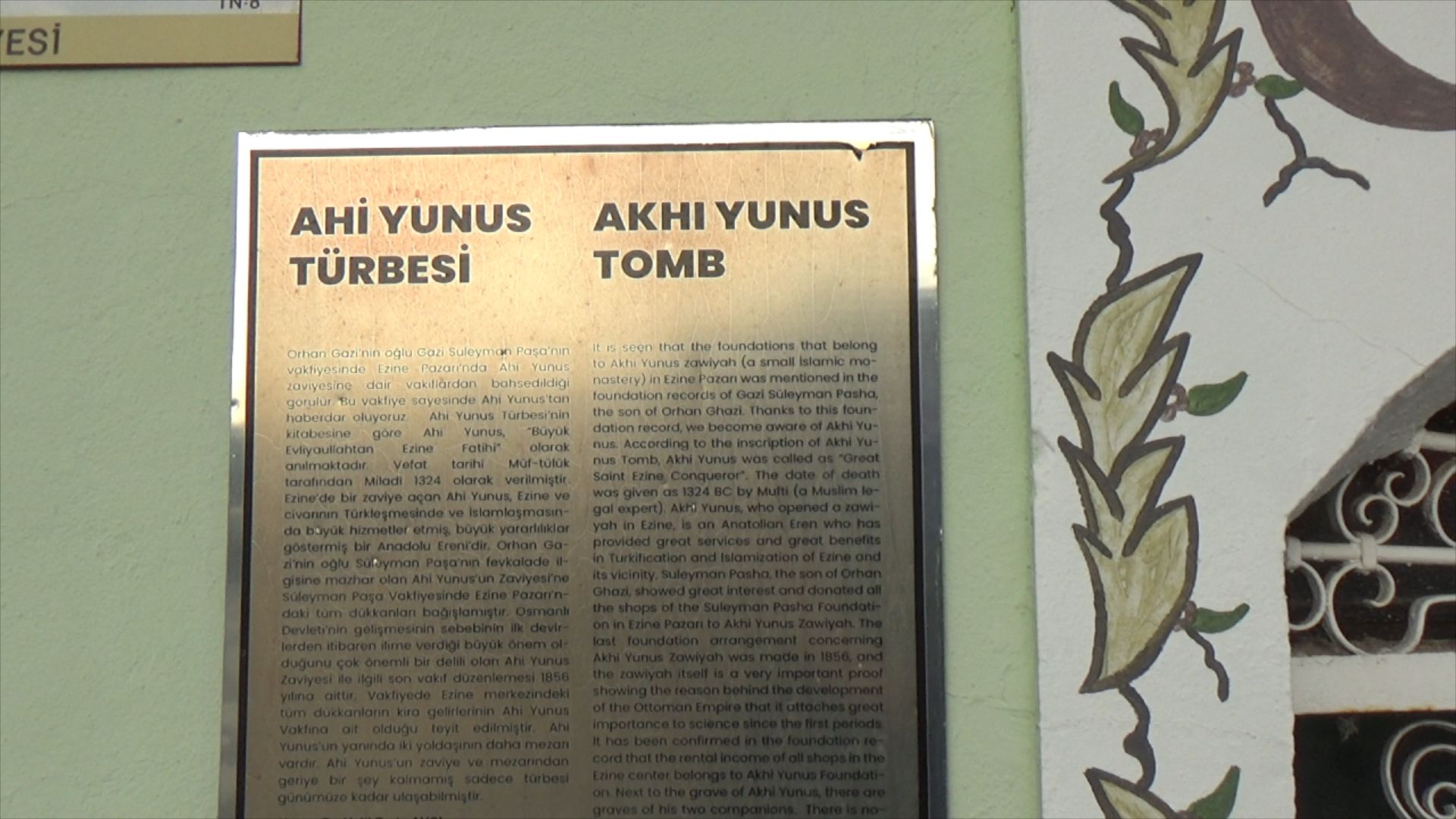

In the very centre of Ezine, opposite the Seferşah Mosque, stands the tomb and zaviye of Ahi Yunus, a site that has been regarded with deep reverence by the townspeople for centuries. Known locally as the “Üç Dedeler” or “Three Elders,” the complex contains three graves, one of which is said to belong to Ahi Yunus himself, while the others are believed to be those of his brothers. Over time the place has become not only a historical landmark but also a living centre of devotion, where people still come to light candles, make offerings and express their wishes in prayer.
The history of the tomb dates back to the early fourteenth century. Records state that it was constructed in 1324 by order of Gazi Süleyman Pasha, one of the early Ottoman commanders responsible for campaigns across the region. The building was designed as a simple rectangular structure, roofed with wooden beams and tiles, and featuring broad windows that allow in plenty of natural light. A small courtyard forms part of the complex, providing a quiet space for reflection. Today its upkeep is officially overseen by the Directorate of Foundations, while the day-to-day care of the surroundings is carried out by staff from the neighbouring Seferşah Mosque.
Ahi Yunus himself is remembered in tradition as a saintly figure, both a learned man and a moral guide connected with the Ahi brotherhoods that were so influential in Anatolia during the Middle Ages. The Ahis were known for combining craftsmanship, ethical conduct and religious devotion, and they played an important role in the development of towns. Sources refer to Ahi Yunus as the “owner of the city,” an indication of the esteem in which he was held. It is recorded that Gazi Süleyman Pasha granted the market of Ezine as an endowment to his zaviye, thereby ensuring both its prosperity and its central place in the community.
Local belief holds that Ahi Yunus and his brothers were among the early settlers or spiritual pioneers of Ezine, helping to establish the town both materially and spiritually during the formative years of Ottoman rule. Their burial in the heart of the settlement symbolises their lasting connection with its people. For generations the tomb has been considered a protective and sacred presence, and many residents regard Ahi Yunus as a spiritual guardian of Ezine.
Although more than seven hundred years have passed since its foundation, the tomb continues to attract visitors who see it as a link to the town’s past and a place where history and faith meet. In this way Ahi Yunus and his brothers remain an enduring part of Ezine’s identity, remembered not only for their role in shaping the early life of the settlement but also for their continuing place in the spiritual life of the community.

Ezine’nin tam merkezinde, Seferşah Camii’nin karşısında yer alan Ahi Yunus Türbesi ve zaviyesi, yüzyıllardır halkın derin bir saygıyla ziyaret ettiği bir mekândır. Halk arasında “Üç Dedeler” olarak bilinen bu yapıda üç mezar bulunur. Bunlardan birinin Ahi Yunus’a, diğer ikisinin ise kardeşlerine ait olduğu kabul edilir. Zamanla burası sadece tarihi bir anıt değil, aynı zamanda insanların mum yakmak, adak adamak ve dualar etmek için geldikleri canlı bir ziyaretgâh haline gelmiştir.
Türbenin tarihi on dördüncü yüzyılın başlarına uzanır. Kaynaklara göre 1324 yılında bölgedeki seferlerde önemli rol üstlenen Osmanlı komutanlarından Gazi Süleyman Paşa’nın emriyle inşa edilmiştir. Yapı basit dikdörtgen bir plan üzerine kurulmuş, ahşap kirişlerle örtülmüş ve kiremit çatı ile tamamlanmıştır. Geniş pencereleri doğal ışığı içeri alır. Ayrıca küçük bir avluya sahiptir ve bu bölüm ziyaretçilere dingin bir ortam sunar. Günümüzde yapının resmî bakımı Vakıflar Genel Müdürlüğü’ne ait olup, çevre düzeni ve temizliği ise yanındaki Seferşah Camii’nin görevlilerince sağlanmaktadır.
Ahi Yunus, Anadolu’daki Orta Çağ boyunca önemli etkiler yaratan Ahi teşkilatının bir temsilcisi olarak, hem âlim hem de ahlaki rehber kimliğiyle anılır. Ahiler, zanaatkârlık, dini bağlılık ve dürüstlük ilkelerini bir araya getiren bir topluluktu ve şehirlerin gelişiminde büyük rol oynamışlardı. Kaynaklarda Ahi Yunus’tan “şehrin sahibi” olarak söz edilmesi, kendisine duyulan saygının bir göstergesidir. Rivayetlere göre Gazi Süleyman Paşa, Ezine Pazarı’nı zaviyeye vakfetmiş ve böylece hem yapının gelirini hem de halkın yaşamındaki merkezî konumunu güvence altına almıştır.
Halk inanışına göre Ahi Yunus ve kardeşleri, Osmanlı hâkimiyetinin şekillendiği yıllarda Ezine’nin kurucu ve manevî öncülerindendir. Onların şehrin tam ortasına defnedilmeleri, Ezine halkıyla olan kalıcı bağlarını simgeler. Türbe, kuşaklar boyunca kutsal ve koruyucu bir mekân olarak görülmüş, birçok kişi Ahi Yunus’u Ezine’nin manevî bekçisi saymıştır.
Aradan yedi yüzyıldan fazla zaman geçmiş olmasına rağmen türbe hâlâ ziyaretçilerini ağırlamakta, geçmişle bağ kurmak isteyenler için tarih ile inancın birleştiği bir yer olarak değerini korumaktadır. Böylece Ahi Yunus ve kardeşleri, sadece Ezine’nin ilk dönemlerindeki katkılarıyla değil, günümüzde de halkın manevî hayatındaki yerleriyle kentin kimliğinin ayrılmaz bir parçası olmaya devam etmektedir.




Leave a Reply